
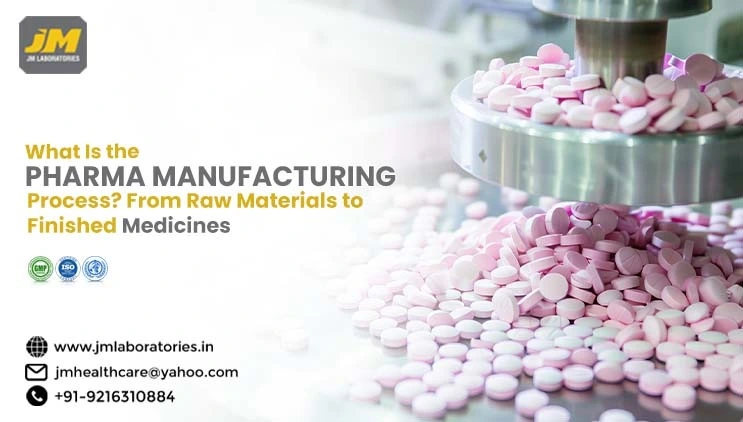
How much time is required to turn the raw compounds from factories into the approved medicines, which you are going to find in your medicine box? In the initial stage, many new startups encounter several problems while handling the various aspects. This will involve, with respect to regulatory timing and workflow, the Pharma Manufacturing Process in India. Obtaining high-quality raw materials, working with clean rooms, and passing all kinds of lab auditing procedures can be really challenging for emerging companies. Patients’ health and well-being depend on the professional manufacturing strategy that is chosen.
Consequently, knowing how to work through the manufacturing process correctly plays a decisive role in launching new products quickly. This will ensure maximum therapeutic efficacy and profitability for your business. Choosing the right Third Party Pharma Manufacturing Process partner is crucial for optimizing your logistics and securing the maximum success of your project. By using a certified high-end automated manufacturing plant, your business will get safe medical drugs of excellent quality.
How Does the Pharmaceutical Manufacturing Process Turn Raw Chemical Compounds Into Verified Medications?
The chemical formulation process is an accurate process because there is an exact procedure for manufacturing chemicals conducted by experts in laboratory environments. The pharmaceutical manufacturer produces tablets, capsules, and syrups every day using raw chemicals via a structured Pharmaceutical Manufacturing Process.
- Accurate weighing and analysis of active chemicals is conducted on all the raw materials.
- Grinding of industrial chemicals is done to reduce their particle size.
- Granulation equipment mixes chemical powder with liquid.
- Tablet-manufacturing machinery produces tablets.
- Capsule-filling machines put medical doses in the gelatin capsules.
- Special coating equipment adds a protective coating to increase product stability.
- Blister packaging equipment seals all individual pills or capsules in special packaging.
What Are the Stages of the Pharma Manufacturing Process?
Supplying Raw Materials
First, in order to manufacture medicines, all the active pharmaceutical ingredients and additional excipients undergo special verification procedures within the comprehensive Drug Manufacturing Process. Professional laboratory technicians use special dispensing booths in reverse laminar air flows to conduct highly precise measurements and ensure the absence of contamination from outside.
Granulation and Mixing
Next, the pharma production process passes on to the granulation stage, which comes immediately after mixing the active compounds and their homogeneous distribution.
Compression and Packaging
Highly sophisticated high-speed rotary compression equipment helps manufacture medicinal tablets from granulated powder. Also, special sorting systems allow you to check that all tablets have the same dosage during this stage of the Third Party Pharma Manufacturing Process.
Coating and Polishing
Moreover, manufacturers add different protective coats that help preserve tablets from light. This measure significantly increases their effectiveness since some ingredients may have a terrible taste.
Blister Packaging
Finally, a professional pharma manufacturing process includes a step of primary package assembly in a blister. All medicinal substances should be completely sterile before usage.
Why Are Quality Control and Regulatory Compliance So Important in Pharma Manufacturing?
| Compliance Requirement | Requirement Standard | Significance for Brands |
| Factory Certification | ISO 9001:2015 and WHO-GMP | It makes it possible to operate legally in both domestic and international markets |
| Testing API Concentration | Greater than 99% via HPLC | Secures a consistent therapeutic effect of medicines |
| Typical Batch Production Time | 30 to 45 Days | Can be used to predict how quickly market inventories can be refreshed |
| Typical Initial Batch Production Costs | ₹25,000 to ₹50,000 | Defining the starting expenses associated with batch production |
- Good Manufacturing Practice rules make it impossible for manufacturing workers to err.
- Standard HPLC testing protocols ensure that there is always an adequate amount of active ingredients in medicine.
- Modern environmental surveillance systems ensure that there are no dust particles in clean rooms.
- Microbiological analysis ensures that all liquid preparations are sterile.
- Keeping complete records on the process of manufacturing ensures perfect traceability of all produced medicines.
- Using accelerated stability testing guarantees the exact expiration date under various climate conditions.
- Mandatory CDSCO approval ensures full compliance with the current laws.
Why Collaborating With a Reliable Pharma Manufacturing Company Is So Helpful for Brands
Advanced Production Facilities
Selecting JM Laboratories as your pharmaceutical manufacturer gives you access to facilities with cutting-edge technology that are certified by ISO 9001:2015 and WHO-GMP. Due to the latest automated equipment, you will receive high-quality medicines without human involvement through an optimized pharma manufacturing process.
Cost Optimization
Besides, hiring a professional manufacturer means that you don’t have to spend millions on purchasing expensive pharmaceutical equipment. Outsourcing to a certified vendor streamlines the overall pharmaceutical manufacturing process and allows your company to save a lot of money.
Fast Launching of New Medicine Collections
Also, by cooperating with a specialized manufacturing facility, you will launch new products much faster. Due to the profound knowledge of regulations governing the drug manufacturing process, you will significantly accelerate all the documentation procedures.
Expanding the Range
In addition, partnering with an experienced manufacturing company helps you diversify your commercial range of products. You can produce cardiovascular medicines, antiallergic tablets, diabetes drugs, and pediatric syrups simultaneously by utilizing their established Pharma Production Process.
Focus on Selling
By outsourcing the third party pharma manufacturing process to professionals, you will have more time to focus on other aspects of your business. Thus, your executive team can pay attention to marketing activities and sales growth.
Conclusion
In conclusion, the process of manufacturing medical products from raw chemical powders involves many stages and requires deep specialization, high-tech equipment, and high-quality control. Each of the stages in the pharma manufacturing process needs to be performed to protect the health of consumers.
JM Laboratories helps its clients launch new collections of medical products within only 30 days. Due to its ISO, WHO-GMP, and FDA certifications, this organization provides high-quality and safe manufacturing processes with minimal risk of contamination.
Frequently Asked Questions
Q1. What is the role of additives in a manufacturing process?
Ans. Excipients serve as additives and carriers that ensure the combination of all the active ingredients and help dissolve them in the stomach.
Q2. How are cross-contaminations prevented?
Ans. Advanced ventilation and filtration systems and negative pressure ensure that there are no contaminants in the room. Moreover, washing operations are always executed between batches of different products.
Q3. What is the main difference between batch and continuous manufacturing?
Ans. A batch manufacturing process implies a separation of produced substances into batches and subsequent careful documentation. Continuous manufacturing means the constant passage of ingredients through the automated manufacturing pipeline.
Q4. Why is granulation needed before compression?
Ans. Granulation clusters small particles of chemicals into large granules in order to prevent separation in hoppers during compression.
Q5. Why are liquid medicines so stable?
Ans. Stainless-steel jackets help control temperatures when mixing liquid syrups. Besides, appropriate preservatives are added to prevent bacterial growth in the product.
Q6. What documents are needed to establish cooperation with a pharmaceutical manufacturer?
Ans. The list includes a license of the brand, a GST certificate, trademark ownership papers, and a manufacturing agreement.
Q7. How long does accelerated stability testing take?
Ans. Accelerated stability testing lasts approximately 15-30 days.
Q8. Do I need 5,000 units for a batch?
Ans. Normally, tablet lines need a minimum of 10,000 to 30,000 units. However, syrups may be produced in smaller amounts.
